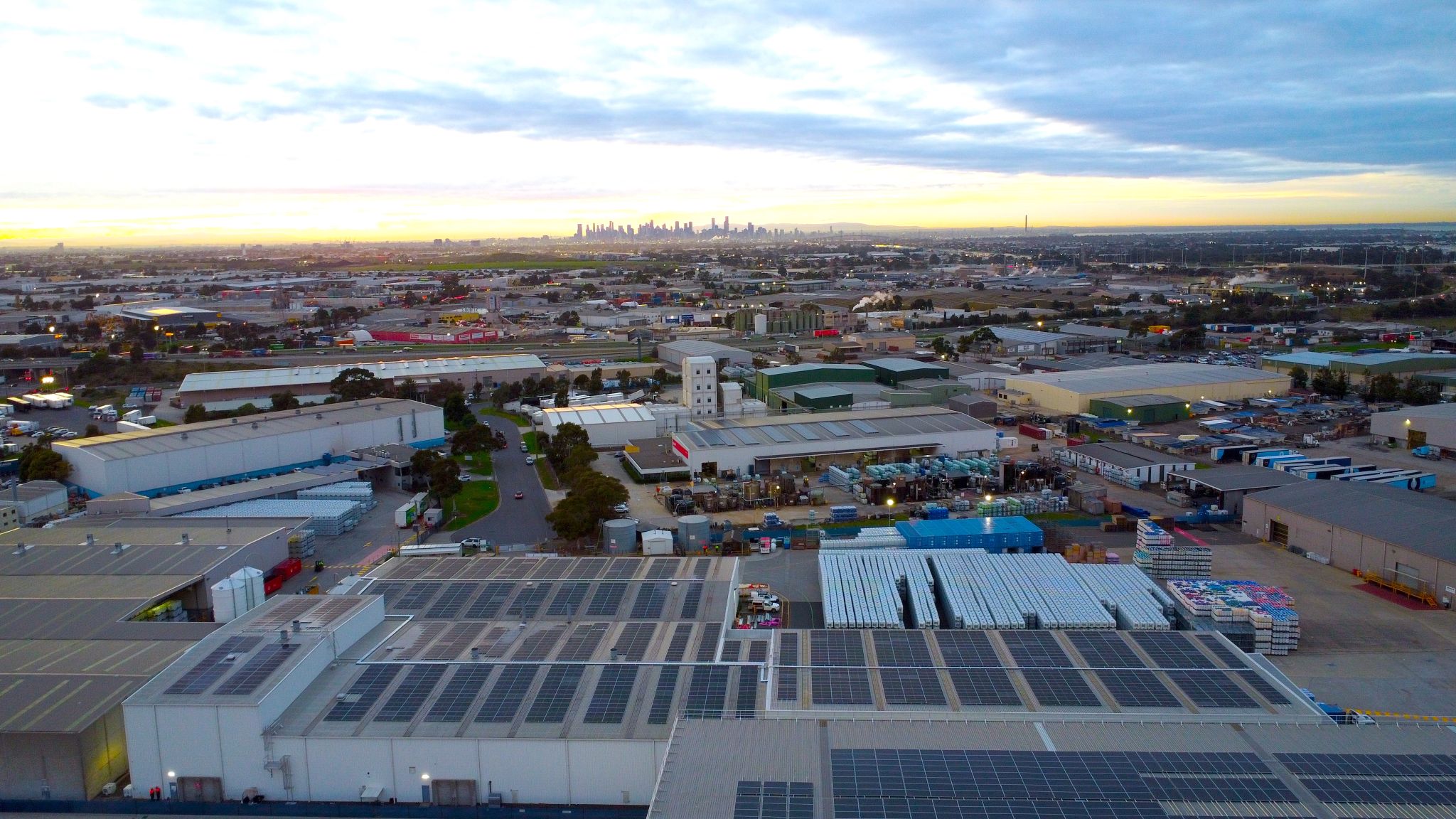
Business electricity prices in Australia could come under renewed pressure towards 2029. Modelling from energy research firm Rystad Energy, reported by news.com.au in November 2026, suggests wholesale electricity prices could rise from around $60/MWh to $110/MWh. That’s an increase of about 83% in the modelled wholesale price. How much of that increase reaches your business depends on where you operate, what your contract covers and when you next renew. news.com.au
The practical step is to check your contract expiry and find out which parts of your bill you can influence. A retailer review may help at renewal. Commercial solar can reduce the amount of electricity you buy during the day. A battery may be worth assessing if your site has costly demand peaks or surplus solar it could use later.
What does the 2029 business electricity price forecast tell us?
The Rystad scenario reflects a timing risk. Ageing coal-fired power stations are due to retire, while new generation, storage and transmission projects take time to build and connect. If replacement capacity arrives later than needed, wholesale prices could rise. The reported figures give businesses a scenario to test when comparing energy options. news.com.au
RepuTex’s October 2026 outlook identifies a similar risk for the National Electricity Market (NEM). Its modelling points to rising transition risk towards 2029–30, particularly in New South Wales, Victoria and Queensland, where coal retirements coincide with growing demand and the need for replacement generation, firming and transmission. The timing and scale of the risk vary by region. RepuTex
How could higher wholesale prices affect your bill?
Your bill can include energy usage charges, network charges, environmental scheme costs, retail charges and, on some tariffs, demand charges. Your contract may bundle some of those costs into a single rate. If you’re on a fixed-price contract, check which components are fixed, which can change during the term and when the contract expires. For a site on a demand tariff, the timing and size of its peak grid draw can also affect costs. Energy Made Easy
For a business with several sites, review each bill and contract before drawing conclusions across the portfolio. A warehouse, a production facility and a cold store can have very different operating hours and tariff structures, even under the same retailer.
How to reduce business electricity cost
| Option | When it’s worth assessing | What to check first |
| Electricity procurement | A contract is approaching renewal, or operating hours have changed since it was signed. | Expiry and notice dates, pass-through charges and total annual cost under each offer. |
| Commercial solar | The site uses a substantial amount of electricity during daylight hours and has suitable roof space. | Daytime consumption, roof condition, export limits and incentive eligibility. |
| Commercial battery storage | The site has costly demand peaks, surplus solar or a meaningful gap between electricity rates at different times. | When peaks occur, how long they last, usable battery capacity and the cost of charging. |
Electricity procurement: compare the annual cost
Start by asking your retailer for interval data, which shows how much electricity your site uses over successive periods throughout the day. Use a full year where available so the comparison reflects seasonal changes, shutdowns and busy periods. Ask retailers to price the same usage profile and set out their assumptions on network charges, contract term and pass-through costs.
A low headline usage rate tells you only part of the cost. If much of your production runs in a higher-priced time window, or your tariff includes a demand charge, those details can change which offer works best. Include planned changes such as a second shift, new refrigeration equipment or an electric vehicle fleet so you can see how the offers might perform as your operations change. Energy Made Easy
Commercial solar: where do the electricity savings come from?
Commercial solar saves money when your site uses the electricity it generates and avoids buying that electricity from the grid. A factory running production equipment during the day may be able to use more of its solar generation than a warehouse with light daytime loads. If a site uses less power on weekends or during shutdowns, model those periods as well. Value electricity used on site and electricity exported to the grid separately, using the applicable rates and export assumptions. Energy Made Easy
There’s also a confirmed change to the federal incentive. The Small-scale Renewable Energy Scheme (SRES) was expanded for eligible solar PV systems above 100 kW and up to 1 MW installed on or after 1 October 2026. Eligible projects can use Small-scale Technology Certificates (STCs) to help reduce the upfront cost. The Clean Energy Regulator has announced that applications are open in the REC Registry. When comparing quotes, ask how the supplier calculated the incentive, who will handle the claim and how the contract treats any difference between the quoted and realised value. legislation.gov.au
Commercial battery storage in Australia: when does it make sense?
A battery can store surplus solar for use later, such as when refrigeration continues after production ends. It can also discharge during a site’s highest-demand periods. The potential savings depend on the tariff’s demand calculation and whether the battery can supply enough power for the duration of the peak. A brief spike from several machines starting together calls for a different assessment from a sustained peak during an afternoon shift. Energy Made Easy
A Virtual Power Plant (VPP) coordinates batteries and other energy resources so they can provide services to the electricity market or grid. If you’re offered a commercial VPP agreement, check how payments and fees work, when the operator can dispatch the battery and how much capacity you can reserve for your own site. Model the bill savings first, then test what the VPP agreement could add after fees and any effect on how the battery serves your operations. Virtual Power Plant (VPP) Demonstrations
How to compare solar and battery options for your business
Ask for a comparison using the same site data and tariff assumptions across three cases where relevant: your current setup, solar only, and solar plus battery. If you already have solar, compare its current performance with the proposed battery addition. This shows what each investment contributes and which assumptions have the biggest effect on the result.
Ask to see projected annual bill savings, operating costs, upfront cost after any confirmed incentive and the effect of a change in electricity rates. For solar, check who has allowed for roof works, switchboard upgrades and grid connection in their scope. For a battery, ask how the estimate accounts for charging costs, energy losses and declining capacity. These details help explain why two proposals with similar equipment can produce different financial outcomes. Solarpedia
If capital is limited, compare an outright purchase with any no-capital-outlay offer available to your site, such as an on-site solar power purchase agreement. Check the payment rate, any annual increases, contract term and exit or transfer provisions. For a leased site, consider what happens if the lease ends before the energy agreement does.
Frequently asked questions
Will my business electricity bill rise by more than 80%?
The reported figure is for wholesale prices in one modelled scenario. Your bill includes several components, and the effect depends on your tariff, region, contract terms and renewal date. news.com.au
Can a commercial solar system above 100 kW now qualify for STCs?
Yes. Eligible solar PV systems above 100 kW and up to 1 MW installed from 1 October 2026 can qualify under the expanded federal scheme. Confirm the project’s eligibility and documentation requirements before relying on an incentive in your budget. legislation.gov.au
Can a battery reduce peak demand charges?
It can when the tariff includes demand charges and the battery is sized and controlled to discharge during the intervals that determine those charges. Your bill and interval data are the starting point for checking whether the opportunity is material. Energy Made Easy
Can my business install solar without capital outlay?
An on-site solar power purchase agreement may be available for a suitable project. Compare the contracted solar rate with the grid charges you expect to avoid, and check the full term and site obligations before deciding.
What information do I need for an initial review?
Start with a recent electricity bill, your contract expiry date and details of any existing solar or battery. If you have interval data and know of planned changes to operating hours or equipment, include those too.
Review your options before your next renewal
Send a recent electricity bill to Free Engineer for a preliminary review. Our independent engineers bring a track record of more than 10 years and can help you identify which options merit a closer look. If a project stacks up, we can help define the scope and manage delivery so you can compare offers and see who is responsible for each part of the work.
Better energy solutions. Less hassle. Greater value.
With or without capital outlay.


