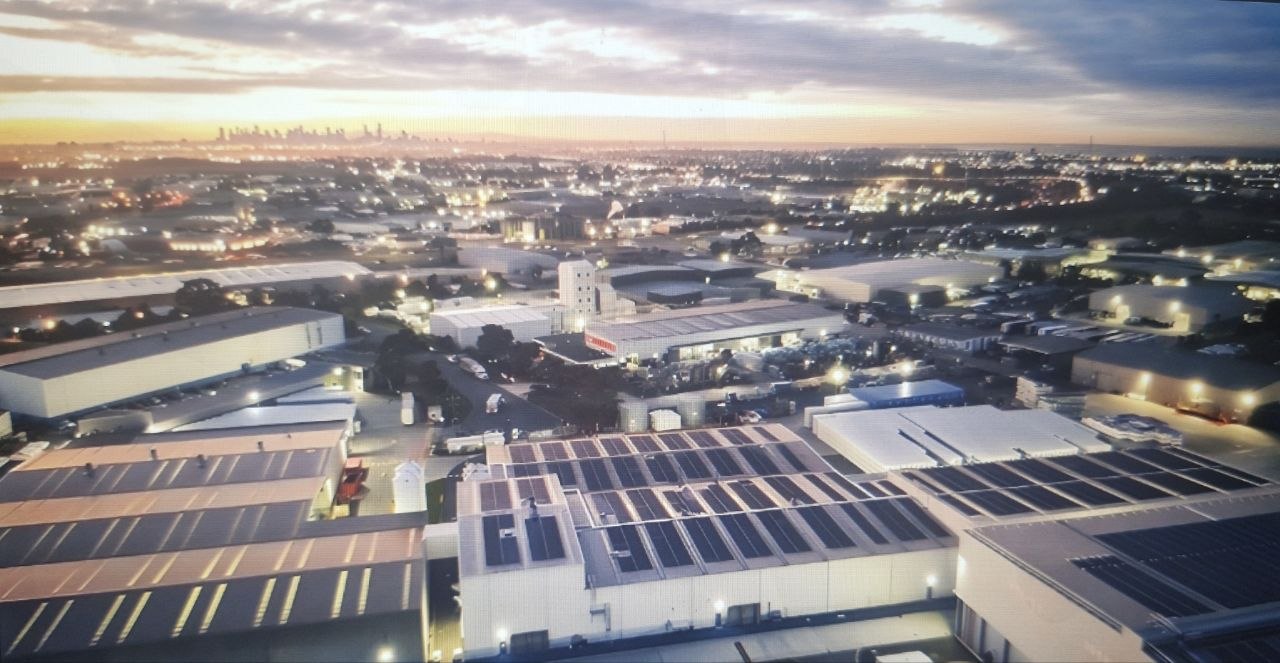
Australia's expanded commercial solar incentives could substantially reduce installation costs for businesses. But new compliance requirements mean choosing the right contractor is more important than ever.
Australia's commercial solar rebate landscape has changed significantly.
Since 1 October 2026, eligible commercial solar installations above 100 kW and up to 1 MW can access federal incentives through the expanded Small-scale Renewable Energy Scheme (SRES).
For Australian manufacturers, warehouses, agricultural businesses and commercial property owners, this creates an opportunity to install larger solar systems with lower upfront capital requirements.
Eligible Victorian businesses may also benefit from additional incentives through the Victorian Energy Upgrades (VEU) program.
But there's an important catch: bigger incentives don't necessarily mean simpler projects.
For larger commercial solar installations, grid connection approvals, engineering
requirements and incentive compliance can significantly affect project costs, timelines and financial returns.
Understanding these requirements before signing a contract could be just as important as securing the rebate itself.
1. What Changed with Australia's Commercial Solar Rebates in 2026?
Previously, Australia's Small-scale Renewable Energy Scheme generally supported eligible solar photovoltaic systems up to 100 kW.
Larger commercial solar projects typically relied on Large-scale Generation Certificates (LGCs), which are generated progressively based on eligible renewable electricity production.
From 1 October 2026, the federal government expanded the SRES to cover eligible solar installations above 100 kW and up to 1 MW.
This means businesses considering larger solar installations can potentially receive an upfront financial benefit through Small-scale Technology Certificates (STCs).
How much could businesses save?
Australia's expanded Small-scale Renewable Energy Scheme could substantially reduce the upfront cost of eligible commercial solar installations.
The actual incentive depends on system capacity, geographic location, the applicable deeming period and STC market value.
For eligible installations from 1 October 2026, the following estimates illustrate the potential federal STC benefit across Australia's four solar zones.
| Solar system size Indicative federal STC incentive range | |
| 250 kW | $56,000–$77,000 |
| 500 kW | $113,000–$154,000 |
Estimates assume a five-year deeming period and an illustrative STC value of $38 per certificate. The lower estimates use Solar Zone 4 (rating 1.185), while the upper estimates use Solar Zone 1 (rating 1.622). Figures are rounded and exclude certificate transaction costs.
These figures illustrate potential gross certificate values, not guaranteed rebates or discounts passed on to customers.
Eligible Victorian businesses may also benefit from additional VEEC incentives, subject to the applicable scheme requirements.
These incentives can improve commercial solar project economics, but eligibility, engineering design and grid connection compliance should be assessed before incorporating the expected rebate into a financial proposal.
When can businesses claim the new STCs?
The expanded eligibility applies to qualifying mid-scale systems installed from 1 October 2026.
The Clean Energy Regulator has advised that applications for mid-scale STCs are expected to open in mid-to-late November 2026.
Businesses should distinguish between being eligible for an incentive and being able to submit and successfully complete a certificate claim.
The timing of incentive receipts should also be reflected in project cash-flow planning.
2. STCs vs LGCs: Which Offers Better Value?
One of the most significant changes is how eligible mid-scale solar projects can receive financial support.
Small-scale Technology Certificates (STCs)
STCs represent a calculated quantity of renewable electricity expected to be generated over an applicable deeming period.
For eligible mid-scale solar systems, the expanded scheme provides a fixed five-year deeming period.
Because the certificates can be created following a compliant installation and satisfaction of the relevant requirements, they can provide an upfront financial benefit.
This can make project financing and investment decisions more straightforward.
Large-scale Generation Certificates (LGCs)
LGCs are created based on eligible electricity generated by accredited renewable energy power stations.
Unlike the deemed STC mechanism, LGC revenue is generally realised over time as qualifying electricity is generated, measured and certificates are created and sold.
LGCs also carry greater exposure to future certificate market prices.
How do STCs and LGCs compare?
| Consideration | Expanded mid-scale STCs | Traditional LGC pathway |
| Incentive mechanism | Deemed renewable generation | Eligible metered generation |
| Financial benefit | Potentially available upfront | Generally realised over time |
| Revenue certainty | Certificate quantity can be estimated before installation, subject to eligibility | Depends on actual generation and certificate market conditions |
| Certificate pricing | STC prices have generally remained close to the $40 clearing-house price |
LGC prices have experienced substantial volatility |
| Administration | Installation and compliance evidence | Accreditation, generation measurement and ongoing administration |
| Main consideration | Eligibility and certificate claim timing | Generation performance and future certificate prices |
Which option provides better value?
For eligible commercial solar installations between 100 kW and 1 MW, STCs generally offer a more attractive and predictable financial incentive than LGCs under current market conditions.
There are two main reasons.
Greater upfront financial certainty
STCs provide an upfront incentive based on deemed renewable generation.
In contrast, LGCs are earned progressively as electricity is generated, with future revenue exposed to changing certificate prices.
This makes STCs particularly attractive for businesses seeking to reduce initial capital outlay and improve project payback periods.
Current LGC prices are relatively low
As at 26 October 2026, the LGC spot market price was approximately $7.45 per certificate, substantially below the approximately $40 price level associated with STCs.
Although the two mechanisms cannot be compared solely on their unit prices, the low prevailing LGC price and uncertainty over future prices make the upfront STC pathway commercially compelling for eligible installations.
Businesses should still confirm eligibility and obtain a project-specific financial assessment before committing.
3. Can Victorian Businesses Combine STCs and VEECs?
Yes. Eligible Victorian commercial solar projects may benefit from both federal STCs and Victorian Energy Efficiency Certificates (VEECs).
However, the available combinations depend on the VEU activity pathway.
Activity 47: Deemed VEEC Method
Under the Victorian Energy Upgrades program, Activity 47 provides a deemed VEEC pathway for qualifying commercial and industrial solar installations between 30 kW and 200 kW.
Eligible installations can potentially combine these VEECs with federal STCs, provided allapplicable requirements are satisfied.
This can improve the financial attractiveness of commercial solar projects in Victoria.
VEEC Measurement and Verification Pathway
The VEU Measurement and Verification (M&V) pathway operates differently.
It determines eligible emissions reductions using project-specific measurement and verification rather than the deemed savings approach under Activity 47.
The M&V pathway cannot be used to claim VEECs for the same emissions abatement already credited under STCs.
Separately demonstrated emissions abatement may be treated differently under the applicable rules, but businesses should not assume that M&V VEECs can simply be stacked on top of STCs for the same solar generation.
Which incentive pathway is better?
The best approach depends on the installation's capacity, electricity consumption, expected certificate value, eligibility and compliance requirements.
A case-by-case financial and technical assessment is necessary to weigh the advantages and disadvantages of the available incentive pathways.
For some projects, STCs combined with Activity 47 VEECs may provide the strongest outcome.
4. The Catch: Grid Connection Approval Can Affect Your Solar Incentives
A business may receive an attractive quotation showing substantial incentive deductions and a compelling payback period.
But what happens if the installation encounters unexpected network connection
requirements?
Or if the evidence needed to support an incentive claim is incomplete?
Why network approval matters
The expanded mid-scale STC scheme requires compliance with relevant planning and approval obligations and applicable network connection agreements.
The person entitled to create the certificates must also provide the Clean Energy Regulator with required information or documentation demonstrating compliance.
Depending on the project, this may include network connection agreements and engineering reports.
This makes early grid connection planning particularly important.
A solar system can be physically installed without necessarily having satisfied every requirement needed for its intended incentive claim.
Businesses should therefore confirm what documentation is required, who is responsible for obtaining it and when the incentive can realistically be claimed.
How does this differ from smaller solar systems?
Traditional sub-100 kW solar projects have long been subject to electrical safety, equipment, accreditation and applicable network requirements.
The expanded mid-scale scheme adds specific planning, approval and documentary requirements appropriate to larger installations.
The distinction should not be interpreted as meaning that smaller systems are exempt from network connection obligations.
Nor should businesses assume that every mid-scale STC claim requires exactly the same commissioning or energisation milestone.
The correct requirements depend on the applicable regulations, installation circumstances and network connection arrangements.
What about Victorian VEECs?
The Victorian commercial and industrial solar activity also has explicit DNSP connection requirements.
Under the deemed activity, the Essential Services Commission's guidance requires evidence relevant to the system's installation and energisation.
This is particularly important when a business intends to claim both federal and Victorian incentives.
The practical lesson: confirm the network approval and certificate evidence requirements before treating the incentive as secured revenue.
5. Why Grid Connection Can Be More Complicated for 100 kW–1 MW Solar Systems
Larger solar systems can have a greater impact on the electricity distribution network.
As a result, network service providers may require additional technical assessments before approving a connection.
The scope depends on the site, network conditions, system capacity and proposed operating arrangements.
Network capacity assessments
The distribution network service provider (DNSP) may need to assess whether the local network can accommodate the proposed solar installation.
This can affect allowable export capacity or require changes to the system design.
Protection and electrical engineering
Larger installations may require additional protection arrangements, coordination studies or modifications to existing electrical infrastructure.
Requirements can vary depending on the connection point, transformer configuration and existing switchboard arrangements.
Export limitations, control systems and emergency backstop requirements
Some commercial solar installations may be subject to fixed export limits, dynamic export arrangements or emergency backstop requirements.
An emergency backstop allows an authorised party to remotely reduce or interrupt solar generation under specified circumstances to maintain electricity system security.
Depending on the state, DNSP and connection requirements, compliance may involve compatible inverters, communication gateways, control systems or approved interoperability arrangements.
These requirements should be considered during system design rather than treated as an afterthought.
They can influence equipment selection, commissioning and the system's operating arrangements.
Commissioning and testing
Depending on the installation, the DNSP may require specific commissioning documentation, protection testing or verification before the system can operate under its approved connection arrangement.
These requirements can affect project completion and energisation schedules.
The larger the investment, the more important it becomes to establish grid connection feasibility early.
6. How Grid Connection Delays Can Affect Your Solar Investment
The financial consequences of delayed approvals can extend beyond additional engineering costs.
Consider a business evaluating a commercial solar proposal.
The quoted project price includes an expected STC benefit.
The investment case assumes that the incentive will be realised and the system will begin generating electricity within the planned timeframe.
If network approval or compliance issues delay completion, several consequences may follow.
Unexpected project variations
Additional engineering assessments, protection equipment or technical modifications may increase project costs.
Whether those costs are payable by the customer depends on the contract and the agreed scope of work.
Delayed incentive revenue
If required documentation is unavailable or an installation does not satisfy eligibility conditions, the expected certificate claim may be delayed or unsuccessful.
That can affect contractor cash flow and jeopardise the contractor's ability to fulfil its obligations and provide ongoing support.
Delayed electricity savings
A delayed operational start also means the business may continue purchasing electricity from the grid for longer than anticipated.
This can change the project's realised payback period.
Contractor financial exposure
Where a contractor has priced a project on the assumption of receiving substantial incentive revenue, delays or unsuccessful claims can create financial pressure.
Across multiple installations, that exposure may become significant.
This does not mean contractors will necessarily experience financial difficulty.
However, customers should understand how the contract allocates these risks and what protections apply if the contractor cannot complete its obligations.
Long-term support considerations
Commercial solar systems are long-term assets.
Businesses need confidence that the responsible parties have the technical capability and financial stability to support the project beyond installation.
Over more than 10 years in the solar industry, Free Engineer has observed solar companies cease trading, leaving customers without the ongoing support they expected.
A competitive installation price is important.
But the true value of a commercial solar investment also depends on successful delivery and long-term reliability.
7. Seven Questions to Ask Before Signing a Commercial Solar Contract
Before committing to a substantial solar installation, businesses should ask prospective contractors the following questions.
1. Has grid connection feasibility been assessed?
Ask whether the contractor has reviewed the site's network connection arrangements and identified likely approval requirements.
An early feasibility assessment can help reveal potential constraints before detailed design and procurement.
2. Who is responsible for DNSP approvals?
Confirm who will prepare and submit the connection application, respond to technical queries and obtain the required approvals.
Responsibilities should be clearly documented.
3. Does the contractor have in-house, experienced Australian-based engineering expertise?
Larger solar installations can require specialised electrical engineering and familiarity with Australian standards and DNSP requirements.
Ask who will do the technical design, drawings and commissioning coordination.
Having experienced engineering expertise directly involved in project delivery can improve accountability, communication and the ability to resolve technical issues.
4. Are all relevant engineering and connection costs included?
Clarify whether the quotation includes relevant engineering assessments, connection application fees, protection equipment, testing and commissioning.
Where costs remain uncertain, request transparent allowances and a clear variation process.
5. Who bears the financial risk if incentives are delayed or rejected?
This is particularly important when STCs or VEECs have been deducted from the quoted price.
Ask whether the contract clearly explains:
Who is responsible for certificate eligibility and claims.
What happens if the expected certificate value changes.
Who bears the cost of a delayed or unsuccessful claim.
Whether additional customer payments can be requested.
Consider obtaining independent legal advice on significant contracts.
6. Can the contractor demonstrate relevant project experience?
Ask for examples of completed commercial solar installations of comparable size and complexity.
Relevant experience should include network approvals, engineering coordination and successful project delivery.
7. Does the contractor have a proven track record of project delivery and successful VEECs claim?
Look beyond the number of installations completed.
Consider the contractor's experience with technically complex projects, successful VEECs claims, project management capability and long-term business track record.
A solar installation should be treated as a long-term energy investment, not simply a one-off construction project.
8. Why Engineering-Led Solar Design Can Deliver Better Value
Commercial solar is not simply a matter of installing as many panels as possible.
The best system size depends on several interconnected factors.
These include electricity consumption patterns, roof space, network capacity, export limitations, available incentives and the business's financial objectives.
For example, a larger system may generate more electricity but introduce additional technical and connection requirements.
A differently configured system may deliver a better financial outcome if it achieves higher- value self-consumption or operates more effectively within the approved network conditions.
Likewise, a business with substantial daytime electricity consumption may benefit from a different design than one with high evening demand.
Battery storage may also be worth investigating where load shifting, demand management or other operating benefits justify the investment.
The most commercially attractive system is not necessarily the largest system—or the one with the biggest advertised rebate.
It is the system that provides the strongest overall technical and financial outcome for the business.
An engineering-led assessment considers these factors together.
This can help businesses avoid designs that appear attractive on paper but become less appealing once connection requirements and operational constraints are understood.
9. How to Maximise Commercial Solar Rebates Without Increasing Project Risk
For businesses considering installations between 100 kW and 1 MW, a sensible approach involves five stages.
Stage 1: Assess electricity consumption
Review interval electricity data, tariff arrangements, peak demand and daytime energy usage.
This helps establish the appropriate solar capacity and likely value of self-consumption.
Stage 2: Evaluate the incentive pathways
Assess federal STC eligibility and, where applicable, Victorian VEEC opportunities.
In Victoria, Activity's deemed VEEC method can potentially be combined with STCs, whereas the Measurement and Verification pathway cannot claim VEECs for the same abatement already covered by STCs.
An analysis is required to weigh the advantages and disadvantages of the available pathways on a case-by-case basis.
Consider the financial value, timing, eligibility and compliance requirements before selecting the preferred incentive strategy.
Stage 3: Investigate grid connection feasibility
Identify the applicable DNSP requirements, likely export limitations, emergency backstop obligations and relevant engineering requirements.
Stage 4: Develop a realistic financial model
Account for installation costs, applicable incentives, electricity savings and relevant financing arrangements.
Ensure that the model reflects the proposed system's expected performance and the timing of available incentives.
Stage 5: Review contractor engineering capability and experience
Does the contractor have in-house, experienced Australian-based engineering expertise?
Confirm who will undertake the technical design, prepare engineering drawings and coordinate grid connection approvals and commissioning.
Also consider the contractor's experience delivering projects of comparable size and complexity.
10. Frequently Asked Questions About Commercial Solar Rebates in Australia
Are commercial solar rebates available for systems up to 1 MW in 2026?
Yes. From 1 October 2026, eligible commercial solar installations above 100 kW and up to 1 MW can access STCs under the expanded federal Small-scale Renewable Energy Scheme.
The installation must satisfy the applicable scheme requirements.
How much is the commercial solar rebate for a 500 kW system?
Based on an illustrative STC value of $38 per certificate, the potential gross federal STC value for an eligible 500 kW installation is approximately $113,000–$154,000, depending on the applicable Australian solar zone.
Actual entitlements and the financial benefit passed on to the customer may differ.
Can businesses claim both STCs and VEECs in Victoria?
Potentially, yes.
Eligible Victorian commercial solar projects may qualify for federal STCs and VEECs under Activity 47, subject to the requirements of both schemes.
The Measurement and Verification pathway is different and does not permit VEECs to be claimed for the same emissions abatement already credited through STCs.
Is grid connection approval required to claim mid-scale STCs?
The expanded scheme requires compliance with applicable network connection agreements and relevant planning and approval requirements.
Required supporting evidence may include network connection agreements and engineering reports.
The exact documentation and relevant completion milestones depend on the installation and applicable requirements.
Can a solar system claim STCs before it is connected to the grid?
The answer depends on the system category and the applicable scheme requirements.
Traditional small-scale systems and expanded mid-scale systems have different documentary requirements.
Businesses should not assume that physical installation alone establishes eligibility for a mid- scale STC claim.
Does a zero-export commercial solar system still need DNSP approval?
A zero-export arrangement should not be assumed to remove the need for network connection approval.
Connection obligations depend on the relevant DNSP requirements and the proposed installation.
Export control arrangements may reduce network impacts, but they do not automatically eliminate connection compliance requirements.
What happens if a commercial solar incentive claim is rejected?
A rejected claim can affect the expected project economics and may create a dispute over responsibility for the lost incentive.
It may also place financial pressure on a contractor that has relied on receiving certificate revenue.
The consequences depend on the reason for rejection and the contractual arrangements between the parties.
Businesses should ensure that incentive responsibilities and financial risks are clearly addressed before signing.
11. Before You Invest, Make Sure the Numbers Stack Up
Australia's expanded commercial solar incentives present a valuable opportunity for businesses considering larger installations.
For eligible projects, the new STC pathway can reduce upfront capital requirements and improve the financial attractiveness of commercial solar.
Victorian businesses may also benefit from additional VEEC incentives.
However, the strongest investment decisions consider more than the advertised rebate.
Grid connection feasibility, engineering design, compliance planning and contractor reliability can be just as important as the initial installation price.
At Free Engineer, we believe businesses deserve commercially sound energy solutions supported by experienced engineering and effective project management.
With over 10 years of industry experience, our engineering-led team helps businesses navigate the technical, financial and regulatory complexities of commercial solar and battery projects.
Considering Commercial Solar Between 100 kW and 1 MW?
Whether you're exploring a new installation, expanding an existing system or comparing contractor quotations, an independent engineering perspective can help identify opportunities and potential risks before you commit.
Have an existing solar proposal? Ask Free Engineer about an independent engineering and incentive review.
Better energy solutions. Less hassle. Greater value.
With or without capital outlay.
Disclaimer: This article provides general information based on regulatory guidance available as at 29 October 2026. Incentive eligibility, certificate values, network requirements and project economics vary. Businesses should obtain project-specific technical, financial and legal advice before making investment decisions.


